25 years before the Communist Party of Czechoslovakia was declared a criminal organization and disbanded, director Milos Forman created a deceptively modest satire that nearly resulted in him being put in prison.
Forman was charged with sabotaging the socialist society. Forman might have had an abbreviated career were it not for French New Wave directors Francois Truffaut and Claude Berri joining together to purchase from famed producer Carlo Ponti, after Ponti backed out.
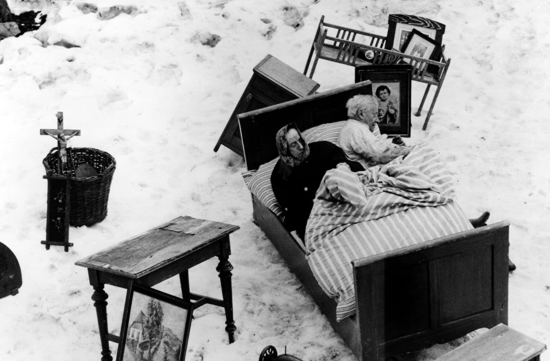
Nonetheless, the 1967 comedy was banned “permanently and forever” by Communist censors at the time.

A small Czech town’s fire brigade prepares for a fundraising ball and impromptu beauty pageant in the town hall. The unit’s eight aging firemen plan a tribute to their 86-year-old honorary chairman with an engraved miniature ax.

A parade band anthem plays a victory march on the film’s soundtrack. The men wouldn’t normally give such an extravagant gift, but privileged knowledge regarding their chairman’s cancer prognosis — he doesn’t even know he has it — calls for some sacrifice. Well, you might think it would.

A large table sits filled with numbered raffle prizes such as bottles of beer and wine, headcheese, cakes, and stuffed animals. Before the party even begins, items start to vanish. It seems the firemen also abide by the local value system that evangelizes, ”Who doesn’t steal is stealing away from his family.” The citizenry is so poor that they will pilfer anything to improve their impoverished existence. Forman’s use of a non-professional cast means that we are witnessing people playing themselves. The director creates a focused attack on the Communist system and the effect of its policies on a working class community.

“The Fireman’s Ball” bites all the more as a social satire because it seems to ridicule its own characters. Foreman doesn’t judge his characters’ absurd or ignorant behavior. He loves them. But he doesn’t attempt to mitigate their utter lack of common sense.

In a 2001 interview, Forman reveals the specific line from “The Firemen’s Ball” that incensed the Communist censor. It comes late in the film after the party hosts request that all stolen items be replaced to the table during a momentarily absolving period of darkness. When the lights go on, one of the firemen is caught tossing headcheese back onto the table. One of the other firemen berates his forthright colleague.

Another one posits, “If you were in the same situation, you would have returned it too, because you’re honest.” To which the infuriated public servant replies, “The good name of the fire brigade means more to me than any honesty, you pighead!”

Milos Forman and his co-writers knew they were making a dangerous movie when they changed dialogue while they were shooting. That they located such an organic vehicle — a traditional public forum with a built-in cast — from which to emphasize a treasure trove of Communist Czechoslovakia social issues, is amazing.