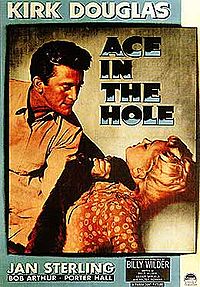
After a string of successes that included "Double Indemnity" (1944) and
"Sunset Blvd." (1950) Billy Wilder defied Hollywood expectations with a
scathing indictment of the American media that still stings with the
fire of truth today. For his first film written without his longtime
co-writer Charles Brackett, Wilder based "Ace in the Hole" on actual
events from 1925 wherein a man named Floyd Collins was trapped in a
cave in Kentucky. The unorthodox reporter William Burke Miller won the
Pulitzer Prize for his coverage of the story. Former bad-apple New York
newspaper man Charles Tatum (Kurt Douglas) works for a small paper in
Albuquerque when he stumbles upon Leo Minosa (Richard Benedict), a man
trapped in an old Indian mine. Alternatively titled "The Big Circus,"
Wilder's film-noir vision flaunted cinema conventions with an anti-hero
like no other. Kurt Douglas plays Charles Tatum with a desperation and
conscious rejection of humanity that is repulsive as it is mesmerizing.
Tatum plays his "ace in the hole" when he cooks up a vile scheme with
an election-hungry sheriff (Ray Teal) to milk Minosa's story for "seven
days" by having a rescue team drill into the mountain from the top
instead of going a much more direct way. Jan Sterling plays the trapped
miner's deadly femme fatal wife who goes along with Tatum's
self-serving ideas. Although not a traditional noir, "Ace in the Hole"
(1951) stakes its claim in the genre with a gathering storm of crass
opportunism via a capitalist wormhole. The noir shadows here come from
the claustrophobic interiors of the cramped mountain coffin that Leo
Minosa occupies while the world outside celebrates his plight. The
crowd of thousands that gather around create a circus representation of
the masses whose cold sensitivity rejoice in the misfortune of others.