Groupthink doesn't live here, critical thought does.
Welcome!
This ad-free website is dedicated to Agnès Varda and to Luis Buñuel.
Get cool rewards when you click on the button to pledge your support through .
Thanks a lot acorns!
Your kind generosity keeps the reviews coming!
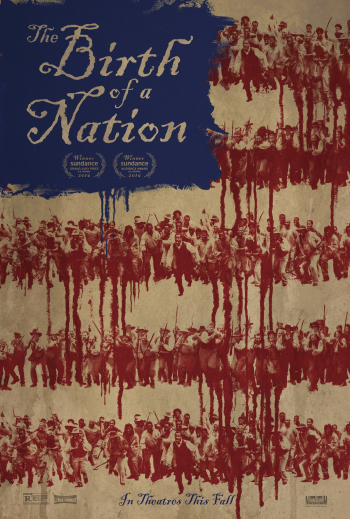
This drably lit attempt to address the systemic racism that has ruled America since the first African slaves were brought over comes across as amateurishly melancholic, if appropriately violent, melodramatic pap. If that sounds like fun, don’t say I didn’t tell you.
Writer/director Nate Parker boxes outside his weight class in attempting to make a self-consciously epic [Black] history biopic about Nat Turner.
Turner was a natural-born black revolutionary who rose up in 1831, however briefly, with the aid of a group of fellow Virginia slaves to murder and burn [around] 60 white slave owners. Naturally, this led to 200 blacks being hanged, beaten, or shot to death by angry whites.
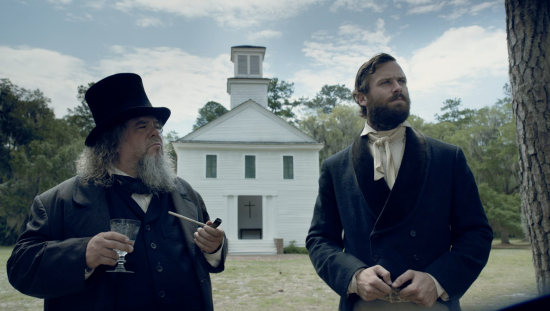
Nat has a comparably cushy preaching gig as a slave to Armie Hammer’s Samuel Turner. Hammer stinks up this otherwise (more or less) odorous with his golly-gee quality that screams of an insufferably patronizing white man. There, I said it, and it feels good.
The filmmakers pour syrupy symphonic music over every other scene, giving the movie a made-for-television quality. Visually, the movie looks like dirty dish water from start to finish. All sense of color is drowned out in favor of a flat blue/gray palate that lulls the viewer into a sleepy state.
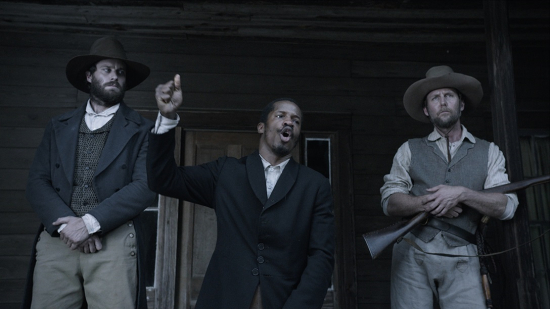
This film’s slack editing, and nonexistent sense of tempo or dramatic beats, leads to an uncomfortable viewing experience. You never feel like you are in the hands of a competent filmmaker. If you’ve ever seen an Alfred Hitchcock film, then you know how you trust his filmic storytelling ability to take you exactly as far as he wants to take you, and to your eventual [personal] destination.
In “The Birth of a Nation,” the audience is made to feel like cattle being headed though a revenge fantasy that doesn’t earn it strips because the storytelling is lightweight. If you want to see epic history melodrama done right, seek out the long version of Bernard Bertolucci’s “1900.” Aside from being my favorite film of all time, it serves as a high water mark.
Props to Nate Parker for reclaiming D.W. Griffith's 1916 pro-KKK propaganda, which informed national and regional political policy for decades. Parker also deserves credit for having the guts to take on such a complicated story and bring it to fruition. Many of this film’s flaws are stylistic, but it all comes down to an underdeveloped screenplay that doesn’t provide the viewer with the filmmaker’s desired effect.
In the end, we don’t make the association between Nat Turner and the incremental genocide of American blacks that has been waged for well over a century. I wanted to like this film, but it doesn’t work as a movie. Ava DuVernay’s documentary “13,” on the other hand, fulfills the historic context and reality that Nate Parker’s film misses.
Rated R. 120 mins.