Groupthink doesn't live here, critical thought does.
Welcome!
This ad-free website is dedicated to Agnès Varda and to Luis Buñuel.
Get cool rewards when you click on the button to pledge your support through .
Thanks a lot acorns!
Your kind generosity keeps the reviews coming!
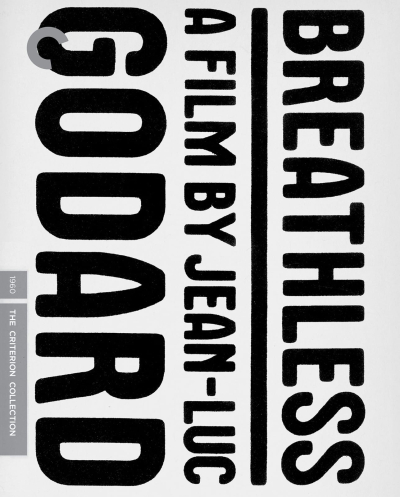 Jean-Luc Goddard’s 1960 debut feature arrived as an explosive third installment in the Nouvelle Vague (French New Wave) movement, behind compatriot film-critics-turned-filmmakers François Truffaut (“The 400 Blows” – 1959) and Claude Chabrol (“Le Beau Serge” – 1958).
Of the three innovative directors, Goddard’s modernist milestone represents the early New Wave’s most radical departure from classic cinema even if the fervent filmmaker laces his film with historic cinematic allusions and storytelling devices.
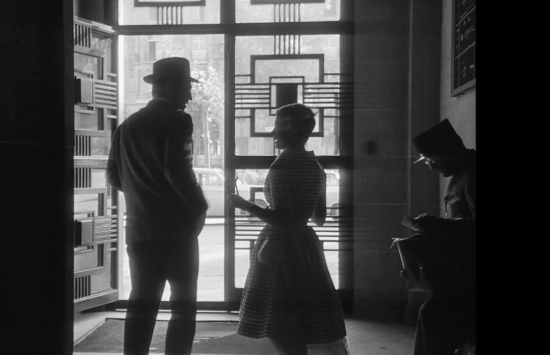
Goddard’s homage to silent cinema involves that era’s signature “iris” wipe to close out specific scenes with an old timey sense of happenstance. On top of his deft uses of cultural touchstones, liberated attitude toward sexuality, and self-reflexive commentary in his dialogue, Goddard snaps the film into shape with unprecedented “jump cuts” that forever changed the rules of film editing.
Goddard arrived at the kinesthetic technique of jagged cutting during the editing process as a way to speed up the action — to prune out the boring stuff. Regardless of how much the method been copied since, Goddard’s fast-forward technique in “Breathless” ("À bout de souffle") has his personalized fingerprints all over it.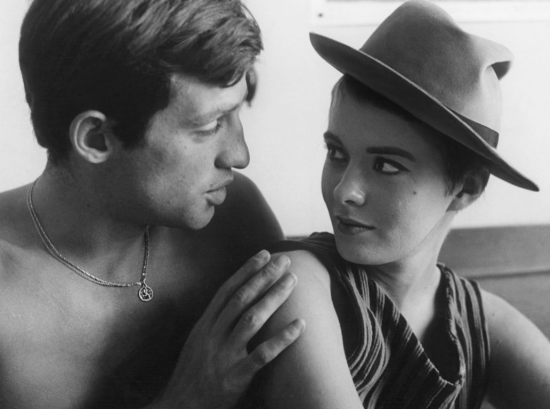
Based on a story by François Truffaut, Goddard’s genre-blended narrative is rooted in the outlaw filmic tradition that spawned gangster biopics like “Scarface” (1932) and a film noir movie like “Gun Crazy” (1950), but also extends to the romantic drama of “Casablanca.”

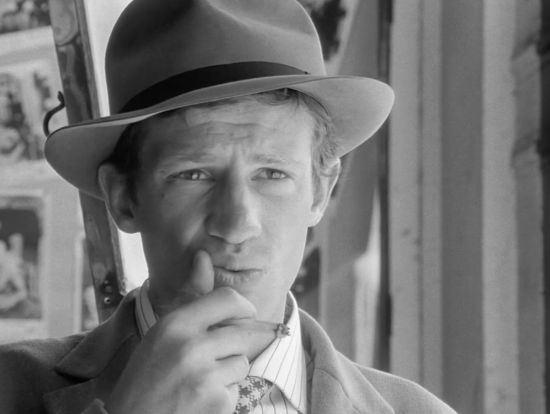
Michel Poiccard (Jean-Paul Belmondo) is a small-time car thief with an insecure sense of self he disguises by emulating Humphrey Bogart. He constantly rubs his right thumb across his lips. Michel lives his life as if he’s the star of his own gangster movie. Forever checking his pose and expressions in mirrors, Michel adopts the affectations of a movie racketeer. He chain-smokes and wears a fedora and suit that make him stand out in a crowd. Michel is so caught up in his own narcissism that he would rather steal money from a random girl he visits than take the cash when she offers it freely.

Goddard captures Michel’s boyishly rebellious psychology during the film’s opening driving sequence after he steals a car in Marseille to drive to Paris. Michel passes up a couple of female hitchhikers whose level of attractiveness he deems not worthy of his standards. An inadvertent bit of social commentary arrives with Michel’s discovery of a loaded pistol in the car’s glove compartment. Hardly any time passes between Michel’s discovery of the gun and the moment when he kills a motorcycle police officer with it after attempting to elude the cop’s pursuit. Michel’s new toy sends him on the run.

Once back in Paris, Michel pursues Patricia (Jean Seberg), an American upstart newspaper journalist waiting to enroll at the Sorbonne. With her pixie haircut and nearly fluent command of French, Seberg’s Patricia represents the film’s magnetic riddle of feminine identity. She refers to “sleeping around” as a road to success she refuses to follow, at least for now. She walks through the street selling copies of the New York Herald Tribune while waiting for her next writing assignment. If Patricia suspects Michel is a hoodlum, she isn’t concerned about it. She wants to blot out her sadness by having fun with a French man she may or may not “love.”
Goddard explores the couple’s budding relationship in a playful centerpiece sequence of flirtation and seduction that plays as innovative today as when it was filmed. Patricia returns to her hotel room to find Marcel sleeping in her bed. Her consciously flat French diction exposes her unwillingness to fully embrace the culture as the couple switch between French and English. They smoke cigarettes that they blithely toss out the room’s open window, glance at magazines, and listen to the radio in a freely expressed mutual seduction that culminates in sex beneath the bed’s sheet.

The spontaneous mood that Goddard sets runs a gambit of obvious and hidden motivations. Discussions of art, literature, and music are a pretense for subtextual communication. Michel asks if he can “piss in the sink,” a common male habit through which he exerts his territory. Patricia tries on different items of clothing, including Michel’s dress shirt to express her femininity. They pull faces at one another and discuss her going to Italy. The captivating sequence operates on the same level of intimacy that Cassavetes ruthlessly pursued in his films. From the film’s overwhelming success, Goddard recognized the demand for calls to escape societal constraints. For Godard, however, critical validation was a curse.
Not Rated. 90 mins.