Fury
The look of David Ayer’s World War II drama is utterly convincing. Every period detail of costume, production design, location, and battle action resonates with authenticity.
The film’s centerpiece sequence takes place inside a quiet German apartment where a mother and her teenaged daughter hide in justifiable fear.
This is the scene that explains why David Ayer made the film, and why “Fury” is a great movie.
Foxcatcher
“Foxcatcher” presents a game-changing role for Steve Carell as John du Pont, the politically connected right wing patriarch of “America’s wealthiest family.”
Bennett Miller’s nuanced true-crime drama is sobering allegory for a ubiquitous sort of willfully ignorant, privileged, blueblood Republicans buying power in exchange for fleeting moments of futile glory.
The film functions on multiple levels to observe how the American elite use and abuse power toward the destruction of everything it touches.
Citizenfour
Laura Poitras’s fascinating documentary, about the initial contact with and aftermath of whistleblower Edward Snowden’s earth-shattering revelations, provides a stark cinema vérité perspective on America’s biggest political scandal.
Snowden recognized early on that the Obama administration and the media would attempt to deflect the significance of his leaks by attacking his character in Nixonian fashion. For once the spooks got much more than they bargained for.
In his claustrophobic hotel room Snowden’s fearlessness is unmistakable: “You’re [the U.S. government] not going to bully me into silence like you have everyone else.”
A Most Violent Year
As with “Margin Call” (2011) and “All is Lost” (2013), Chandor’s latest is a detailed study in complex characters responding to extreme pressures — personal, social, and physical.
Oscar Isaac’s bravura performance during the sequence, and throughout the film, smolders with resolute intent. There is no finer film actor working in the business.
“A Most Violent Year” is essential viewing for film-lovers and for the people least likely to see it.
Nymphomaniac: Volume II
Provocative, droll, fearless, and cinematically sexual in unprecedented ways, “Nymphomaniac” (in its proper unedited form) is a four-hour movie with an unknown potential to alter reality.
Charlotte Gainsbourg’s sexually polymorphic character Joe represents an icon of the contradictions of modern day feminist ideologies.
That Joe’s sexually adventurous self-help therapy places her in the presence of an overeducated male exploiter (disguised as her rescuer) puts a sharp grace note that carries on and on and on.
Wetlands
Challenging and provocative, co-writer/director David Wnendt’s nervy adaptation of Charlotte Roche’s long-presumed unfilmable popular novel breaks new cinematic ground.
Mapping out the terrain of cinema’s previously uncharted psychosexual possibilities, Wnendt opens up a wide range of Roche’s proto-feminist issues around Helen, an 18-year-old German girl with pressing bodily issues.
Here is a female force of nature that rejects religion and societally imposed rules of conduct, in favor of a DIY approach. Helen represents a different brand of one-percenter. The means and the end are evenly justified.
Young and Beautiful
For his latest filmic exploration François Ozon addresses a complex mix of sexual, personal, social, familial, gender-based, and technological issues.
That he does so via a story about Isabelle (Marine Vacth), a beautiful bourgeoisie 17-year-old DIY prostitute, reflects the growth of one of France’s most consistent filmmakers.
Vacth portrays a force of unbridled feminine and intellectual nature. Isabelle has important lessons to teach, as well as to learn. You will never forget this truly mind-blowing film.
Goodbye to Language
“Goodbye to Language” is a vibrant think piece about modern man’s constant state of fear of the Frankenstein culture of violence that governments and corporations have created.
“Is society willing to accept murder as a means to fight unemployment?” Godard provokes and dares the viewer to listen and think. Think for yourself.
Godard views the dichotomy between nature and industrial degradation with a sardonic eye. God couldn’t humble man, so he humiliates him. Absurdly visually abstract, the film keeps its audience on their toes.
Boyhood
Just when you thought there was nothing new under the sun, Richard Linklater goes and makes the most anti-Hollywood movie ever conceived.
Linklater instinctively de-emphasizes anything that might be construed as “dramatic“ while following the life trajectory of a boy named Mason (played by Ellar Coltrane) from age six to 18 growing up in Texas.
The invisible mechanics of “tempo, tone, mood, time, and place” that Linklater uses to flesh out his preplanned narrative form fit almost perfectly within the rules of a “Dogme 95” film.
Mr. Turner
Mike Leigh’s reputation as an unrivaled inventor of cinematic dramaturgy once again over-delivers on his promise.
J. M.W. Turner was a misunderstood artist during his lifetime, but with the help of Mike Leigh, Timothy Spall, and a cast of infinitely gifted actors, audiences can begin to comprehend the life, purpose, and experiences of that tremendously inspired soul.
It is worth noting that the stellar performances from Leigh’s stable of actresses such as Dorothy Atkinson, Marion Bailey, and Ruth Sheen are all of an elevated quality rarely experienced by modern movie audiences.
Big Star: Nothing Can Hurt Me
The greatest band you’ve never heard of, Big Star was every rock critic’s darling during the early ‘70s. The Memphis rock outfit recorded three records that all made it into Rolling Stone magazine’s list of the top 500 albums of all time.
A tasteful labor of love, “Big Star: Nothing Can Hurt Me” is an enthusiastic documentary about enigmatic musicians whose music still sounds as fresh and essential today as when it was first recorded. Whether or not you are familiar with the band or their music, this movie goes straight to your heart.
Before Midnight
The first collaboration “Before Sunrise” (1995) introduced romantically inclined couple Jesse (Ethan Hawke) and Celine (Julie Delpy) travelling on a train from Budapest to Vienna.
“Before Sunset” (2004) found the lovers reuniting for a one-night-stand of sorts in Paris where Jesse — a successful author inspired by the events in the first film — reads from his latest book. Things got complicated.
Now, nearly two decades since they first met, the couple lives together in France with their twin daughters. The film begins at the end of a summer vacation in Greece where they have spent the past six weeks sharing the exotic home of a fellow author and his family. A real-time conversation plays out between Jesse and Celine as they drive back to their host’s house while the girls sleep in the back seat. The seemingly impromptu conversation hits a staggering number of relationship reference points that draw the audience inside their casually intimate style of communicating. No topic is off limits. Politics, sex, religion, literature, and economic realities all come percolating to the surface. The dialogue shimmers.
Blancanieves
More evidence — behind “The Artist” (2011) — that black-and-white silent films are still a viable storytelling approach; writer/director Pablo Berger’s rethinking of the Grimm Brothers’ “Snow White” is a virtuosic masterpiece. Although a relative newcomer — “Blancanieves” is only his second feature — Berger displays an absolute mastery of cinema language with a litany of homages to filmmaking techniques from the past 100 years.
Seville, Spain circa 1920 witnesses one of its beloved matadors Antonio Vallarta (Daniel Giménez Cacho) being gored. Camera technology involving flashbulbs is to blame. The accident leaves the handsome Vallarta paralyzed from the neck down. Tragedy piles up when the former bullfighter’s wife dies giving birth to the couple’s daughter Carmencita on the same day. Vallarta’s evil hospital nurse Encarna (Maribel Verdú) seizes the opportunity to seduce and marry him, relegating Carmencita to live in the mansion’s coal cellar.
Despite its old-fashioned trappings, there is nothing staid about the layers of narrative and visual complexity at play.
Drug War
Magnificent. Johnnie To’s gritty police procedural, involving a Tianjin police department sting operation, shares William Friedkin’s muscular sense of filming techniques — see “The French Connection.” Car chases move with a palpitating sense of real-life suspense and unpredictability. Shoot-outs have a randomness about them that make the action all the more intense. The storyline comes ripped right from modern headlines.
Brutal and full of plot surprises “Drug War” is a type of movie that Hollywood has forgotten how to make. It’s good thing Johnnie To is around to remind them. Let’s just hope Hollywood doesn’t attempt a remake. After all, there’s only one Johnnie To.
All is Lost
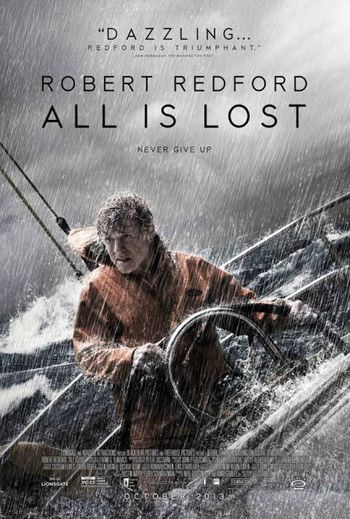 Robert Redford gives the finest performance of his career in writer-director J.C. Chandor’s literal and metaphorical tale of one man’s attempts to survive on the high seas. Redford carries Chandor’s one-man showcase with a depth of character and emotion that speaks volumes in spite of the film’s nearly complete lack of dialogue.
Water pours into Redford’s unnamed character’s 39-foot yacht — a “1978 Cal 39 sailboat” — waking him from his sleep. His punctured vessel — the “Virginia Jean” — is lodged on the puncturing corner of a giant red cargo bin that floats in the middle of the Indian Ocean.
Decisions and repairs must be made. For the next 100 minutes our unnamed embodiment of brawny adaptability will meet every escalating challenge that nature throws at him with a stoic resolve that is fascinating and inspiring to witness.
It is a pure cinematic delight to watch Robert Redford acting, alone, beside such an organic and dynamic backdrop as J.C. Chandor (“Margin Call”) creates. It doesn’t get any better than this.
Gravity
At its heart “Gravity” is a two-man play that shifts into a solo act of survival that is as much defined by personal obstacles as by harsh external forces at play in the thermosphere — 375 miles above the Earth’s surface. There’s an understated feminist element inherent in the film’s theme of last-ditch survival.
Part of the film’s beauty lies in its intuitive casting. George Clooney and Sandra Bullock are movie-star names that sound as though they belong in a romantic comedy more so than in the context of a science-fiction misadventure. Anyone who has ever underestimated Sandra Bullock’s dramatic acting skills will be taken aback. Her nuanced performance compliments Cuarón’s technical virtuosity note for note. The story is deceptively simple. Dr. Ryan Stone (Bullock) is on her first outer space mission, to make repairs to the Hubble telescope. By her side is veteran astronaut Matt Kowalski (Clooney), who counts the mission as his last.
Inside Llewyn Davis
“Inside Llewyn Davis” hits the ground running. Oscar Issac plays the title character, a folksinger patterned loosely on Dave Van Ronk, without pretense. Issac accompanies himself on guitar, singing the old-style song that Van Ronk once recorded — “Hang Me, Oh Hang Me” — in a West Village café during the few barren weeks or months before the folk music movement exploded with the likes of Bob Dylan.
The movie offers a composite musical vantage point of the era’s social realism against a backdrop of Cold War America.
Social changes on the horizon killed off a vibrant genre of music as quickly as it had grown. The Coens’ gift for making their audience feel like welcomed members of an elite club has never felt more sincere.
The Act of Killing
At once the most micro and meta combination of cinéma vérité, documentary, and docudrama filmmaking techniques ever assembled, Joshua Oppenheimer’s “The Act of Killing” is an earth-shattering cinematic experience. The 1965 – 1966 genocide of more than half a million accused “communists” (ethnic Chinese, intellectuals, and union organizers) in Indonesia by right-wing paramilitary and freelance death squads — many consisting of self-proclaimed “gangsters” (a.k.a. “free men,” really unemployed racists) — serves as the stepping-off point for Oppenheimer to inspire, enable, and encourage a handful of aging remorseless killers to dramatize their heinous deeds with whatever artistic trappings they choose.
“Killing” as an “act” takes on a host of different subjective and objective definitions from the personal to the political. Congo and his equally culpable associates retain their gangster bond nearly 40 years after their punishment-free crimes. No amount of description can prepare an audience for the sickening levels of surreal irony of witnessing Congo and his men act out staged scenes of the violence they perpetrated against their neighbors, friends, and associates. Every audience will be affected differently, but every single one will be changed by it.
Blue is the Warmest Color
An epic coming-of-age romantic drama between two captivating forces of feminine nature, “Blue” is as intimate a representation of erotic and romantic love as has ever been committed to cinema. Graphic in its depiction of lesbian sex, it circumvents any accusations of pornographic intent by being hopelessly and sincerely sensual. If that sounds confusing, it should. What director Abdellatif Kechiche achieves is unprecedented.
“Blue is the Warmest Color” is a monumental cinematic achievement that must be experienced by anyone passionate about film. That the movie also encompasses national, familial, political, personal, sexual, intellectual, and artistic themes brings the narrative to an epic level of romantic drama. Still, it never overstresses its implicit nature as an all-inclusive portrait of love.
Once Upon a Time in Anatolia
Turkish filmmaker Nuri Bilge Ceylon uses every shaded detail of time, atmosphere, human condition, and verbal and non-verbal communication to tell a quietly complex story about a murder investigation and the imperfect methods of the men assigned to solve the crime.
At night Doctor Cemal accompanies a group of police officers and a soldier as they drive around the dark outskirts of the Anatolian steppe. The group has with them two incarcerated suspects they hope will lead them to the grave of a missing man. The story is about how detectives communicate. It’s also about how entrusted public servants wrangle with overpowering emotions and personal secrets.
The cinema of Nuri Bilge Ceylon is a transformative one. It is unique and honest. Most significantly, it offers a rare experience to be treasured.
Killer Joe
William Friedkin's dark, funny, and sexy black comedy is a triumph. “Killer Joe” makes “Fargo” seem like a rom-com. The "Exorcist" director once again works with source material by playwright/screenwriter Tracy Letts — the author responsible for Friedkin’s cool 2006 psychological thriller “Bug.” Mathew McConaughey explores his assassin character with calculated vengeance.
For all of its nail-biting sensuality and quicksilver violence, Friedkin is smart about what he leaves to the viewer’s imagination. He concocts a black comedy stew of blood clots, torn panties, and hard-hitting slapstick humor.
Skyfall
“Skyfall” divides three distinct acts as individual homages to specific aspects of the franchise. The first act is a nod to the leaner and grittier modern James Bond — as exquisitely played by Daniel Craig. He’s a first-rate action movie actor.
This time around, Bond has to return to work after being thought dead for several years. A computer-hacking genius villain named Silva launches an attack on Her Majesty’s Secret Service’s — with M (played by the irrepressible Judi Dench) in the crosshairs. Javier Bardem introduces the film’s second act as Silva, an effeminate villain busy revealing the identities of NATO undercover agents embedded in terrorist organizations. The third act provides a retro vantage point. Bond pulls his trusty 1964 Aston Martin (circa Sean Connery's "Goldfinger") out of the garage, and treats the audience to a gloomy bit of nostalgia-defying action set in the Scottish mansion where James Bond lived as a boy when his parents died. Bond says he “never did like the place.” One thing's for sure, it won't be the same when his enemies are through with it.
The Central Park Five
Witness the sordid handling of the notorious “Central Park Jogger” case. An April 19, 1989 brutal beating and rape of a twentysomething white woman led to the railroading of five teenagers, all members of minority groups, whose convictions were eventually vacated — but only after serving more than 41 combined years in prison. Ken Burns’s reputation as one of our era's finest documentarians informs the film’s airtight veracity.
No effort is spared to expose the misconduct and complicity of New York City police detectives, prosecuting attorneys — you’ll never buy another Linda Fairstein novel — media outlets, political figures, and such racist fringe celebs as Donald Trump. Careers were made; justice be damned. The city of New York still has not settled the case to make the wrongfully convicted men whole. Each man is suing the city for $50 million in damages. In Ken Burns’s words, “After 13 years of justice denied – which everyone agrees on — there’s suddenly now justice delayed, which we know is just justice denied.” Justice, as many wrongly accused Americans can attest, is not what we do here in the trademarked “land of the free.”
Hara-Kiri: Death of a Samurai
Takashi Miike’s update of Masaki Kobayashi’s black-and-white 1962 film “Harakiri” never so much as brushes a wrong note. The setting is Japan’s 17th century feudal Edo period — a peaceful era without much need for samurai warriors. Hanshiro, an impoverished ronin, approaches the local samurai lord — Kageyu — to request use of the House of Li’s courtyard to commit seppuku to lend a warrior’s finish to his dishonorable state. Hanshiro’s request is met with cold contempt. Kageyu tells in flashback the story of another samurai — Motome — who came with a similar request the previous week. In the sequence, Kageyu’s assistant Omodaka warns his master that he suspects the man of attempting a “suicide bluff” in order to procure money. Once situated in the courtyard, Motome is assigned a second, a witness, and an attendant. Realizing his dire condition, Motome begs for one more day, or even a few hours, to leave and return before carrying out his bloody mission. His desperate appeal is refused. When he is finished telling the story, Kageyu offers Hanshiro to give up his request and leave without incident; Hanshiro refuses, and insists on following through with his ritual suicide. What follows is all of the backstory behind Motome’s decision to attempt a suicide-bluff, and his relationship to the unwavering Hanshiro. “Hara-Kiri: Death of a Samurai” is a stunner from start to finish.
Rust and Bone
A tour de force by any standard, Jacques Audiard’s convention-breaking romantic drama is one more example of how French filmic storytelling rises above the fray of Hollywood’s forced efforts.
Audiard meticulously examines a complex love story between Alain (Matthias Schoenaerts), a single father who boxes in an underground circuit in Cannes, and Stephanie (Marion Cotillard), a killer whale trainer at a waterpark park who loses her legs in a freak accident involving one of the giant creatures. Matthias Schoenaerts makes for an empathetic anti-hero in spite of, and due to, his character’s honest but guarded nature. The film’s thought-provoking title evokes the strange compatibility linking Alain and Stephanie, two unlikely lovers who develop a unique romantic bond.
Based on a novel by Craig Davidson, “Rust and Bone” is an in-depth character study that never telegraphs its motivations. The provocative sexual component of the couple’s relationship helps the drama earn its stripes.
Django Unchained
Campy, funny, shocking, and seeping with sardonic social commentary, “Django Unchained” is Quentin Tarantino’s finest film to date.
The madness of slavery, the ultimate expression of racism, hangs thick in the air of the American South circa 1858. In customary revenge-plot fashion, Tarantino establishes the nimble bounty hunter Dr. King Schultz (brilliantly played by Christoph Waltz) as the kind of guy who can get himself out of any situation. The retired dentist “purchases” freedom from slavery for Django (Jamie Foxx) in order to assist Schultz in identifying a trio of brothers named Brittle whose heads carry a hefty reward. Django proves more than qualified to hunt down and kill slave-owners. Working together as a team, Dr. Schultz and Django craft a complex plan to free Django’s enslaved wife Broomhilda (Kerry Washington) from the clutches of Leonardo DiCaprio’s evil plantation owner Calvin Candie.
Blood doesn’t just splatter — intestines explode from bodies. As with all of Tarantino’s films, “Django Unchained” is filled with spellbinding dialogue and crazy plot twists.
The Turin Horse
At the relatively young age of 56, Bela Tarr announced he would retire after the completion of his eighth feature film, “The Turin Horse.”
The anti-narrative picks up after an apocryphal event on January 3, 1889 in Turin, Italy, when the German philosopher Friedrich Nietzsche came to the defense of a stubborn carriage horse being brutally whipped by its driver in a piazza. As folklore goes, the sobbing Nietzsche wrapped his arms around the elderly horse’s neck in order to protect it from the enraged driver before the philosopher fell to the ground. Within a few weeks Nietzsche became mentally ill and was mute for the last ten years of his life, which he spent in the care of his mother and sisters.
“The Turin Horse” is an existential provocation to its audience, demanding that we consider the effect of man’s judgments against nature and ultimately against ourselves. The film’s repeated visual, musical, and thematic motifs make it simultaneously transparent and opaque.
Killing Them Softly
Andrew Dominik’s cold-blooded satire of American corporate-political-capitalism cuts through its subject like a freshly sharpened guillotine blade. Economic metaphors big and small fill the narrative about gangster vengeance set in 2008. Dominik based the script on a George V. Higgins novel — see Peter Yates’s “The Friends of Eddie Coyle.”
“Killing Them Softly” is a stylish crime drama made up of piercing monologues and canny dialogue that reverberates with social implications. Nothing is wasted. People and places are appropriately ugly. Every performance is spot-on. That the film so effectively lashes out at economic hypocrisy in America is truly rewarding. Here is a one-movie revolution against all of the corporate-controlled two-party bullshit that has turned America into a third-world dictatorship.
Amour
Michael Haneke’s elegiac exploration of an elderly couple’s final days together transcends all definition of the romantic ideal. Retired music teachers Georges (Jean-Louis Trintignant) and Anne (Emmanuelle Riva) rarely leave the comfort of their spacious Parisian apartment. Anne suffers a stroke that leaves Georges as her primary caregiver. A second attack leaves Anne barely able to communicate with her long-adoring husband.
The tenderness and fire in Trintignant’s and Riva’s portrayals occurs with a quietly operatic significance. The brutality of nature is a mutual enemy that the characters struggle to command. A pigeon that flies into the apartment through a courtyard window is a tragic metaphor that informs Georges’s sense of personal justice. “Amour” is an incredibly intimate movie that provides a priceless definition of romantic commitment and loyalty.
The Arbor
Docudrama director Clio Bernard approaches a dead British playwright's life of persecution and abuse via the lens of situations from her autobiographical plays. When Andrea Dunbar died in 1990, at age 29, she was enjoying some theatrical success. The filmmaker obtained candid audio interviews with Dunbar's surviving family members, who still reside in the same impoverished Bradford estate housing where Dunbar lived. Using a technique called "verbatim cinema," Bernard uses professional actors to lip-synch with interview audio so that the spectator receives the information in a strangely organic fashion. "The Arbor" is a groundbreaking cinematic achievement.
Bellflower
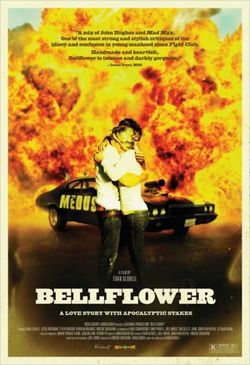 The preteen boys of the '70s who played "war" in their backyards and pored over dirty magazines in their clubhouses are transmogrified into a pair of 21st century twentysomething misfits in writer/director/actor Evan Glodell's wild and woolly contemplation of apocalyptic America. Woodrow (Glodell) and Aiden (Tyler Dawson) are a pair of best friends obsessed with building a flamethrower gun and flame-spewing muscle car named Medusa, after the name of their two-man gang "Mother Medusa."
Evan Glodell has invented a bold vision of independent cinema that pisses down throat of the "mumblecore" indie movement. Call it "apocalypticore." Here is a movie that sears itself into your eyeballs and brain.
Project Nim
James Marsh examines the 25-year chronicle of Nim Chimpsky, a research chimpanzee who was put through the mill in the service of science. Nim's origins trace back to early 1970s hippie Columbia University professor Herb Terrace. Terrace took the baby chimp away from his mother and attempted to train it to communicate through sign language.
With access to a tremendous amount of archival footage of every stage of Nim's life, Marsh intersperses stylistically staged interview segments with many of the participants. Project Nim is an in-depth documentary with far-reaching implications about modern culture. It's impossible not to be swept up in the fragmented story of a de facto child who is repeatedly abandoned by people who exploit him with both good and bad intentions.
Take Shelter
Apocalypse looms large in writer/director Jeff Nichols’s intimate tale of social, mental, and economic duress. Curtis LaForche (Michael Shannon) is a construction worker living in rural Ohio with his wife Samantha (Jessica Chastain) and young hearing-impaired daughter Hannah. Curtis reads a worst-case scenario into foreboding cloud formations he sees. He also suffers from terrifying nightmares, about a coming storm, which cause him to wet the bed. Torn over whether his family's history of mental illness has made its way into his brain—his mother is schizophrenic–Curtis seeks out counseling.
“Take Shelter” captures a macro-micro snapshot of America’s post-9/11 zeitgeist at a moment when a decade of fear fatigue has left the country numb. When everyone is seeking shelter from economic, natural, and human-implemented disaster, no place is safe.
The Skin I Live In
Pedro Almodóvar proves himself an apt technician at sustaining suspense in the thriller genre. Returning to work with Pedro Almodóvar for the first time in over 20-years, Antonio Banderas brings his A-game to a deliciously diabolical role. Plastic surgeon Robert Ledgard (Banderas) is a mad scientist with plenty of method to his particular madness of creating an indestructible skin. His wife died in a car fire. His daughter committed suicide. He harbors vengeance. But why?
"The Skin I Live In" is a haunting film that tips its hat to Alfred Hitchcock. There's a goodly dose of Georges Franju's 1960 French horror classic "Eyes Without a Face." Elliptical time shifts tell the story in a disjointed fashion that makes you want to see the film twice even as you're watching it. There's mystery here to savor as you would any great piece of cinematic art. Pedro Almodóvar has created a masterpiece.
Moneyball
Director Bennett Miller does the improbable. You don’t have to be a math nerd or a baseball fan to savor every minute of Miller’s cinematic balancing act built on Billy Beane’s ah-ha season with the Oakland Athletics in 2002. Brad Pitt gives the performance of a lifetime as former big league player Billy Beane, who recognizes talent when he sees it even if that talent is for crunching numbers. Only Pitt could make chewing tobacco look sanitary.
If last year's thinking-outside-the-box-movie "The Social Network" gave cynical insight to a social activity platform that is already approaching a crisis of identity, "Moneyball" has a more lasting quality. What’s profoundly interesting is how the romanticism of baseball comes through via sidelong moments of deeply personal experience.
The Artist
"The Artist" conjures a bygone era that reminds us why we love Hollywood. Director Michel Hazanavicius's wonderfully nuanced movie made a splash at Cannes and then became the critical darling of the 2011 New York Film Festival.
Hazanavicius meticulously squeezes in an encyclopedic catalog of silent film conventions while staying true to the ideas behind them. The result is a movie that never feels forced or derivative.
The movie is full of sweet little surprises. Between brilliantly executed performances, dance numbers, and an exquisitely told romantic story about loss and redemption, this flawlessly crafted film shimmers. Visually, it’s astoundingly gorgeous. Equal parts drama, romance, spectacle, and comedy, "The Artist" is an instant classic.
Drive
Playing with a William Friedkin-like level of patient intensity, atmospheric style, and shocks of violence Dutch director Nicolas Winding Refn creates his own 21st century dialectic of cinema. "Drive" is a film-lover's dream. Hossein Amini's adaptation of James Sallis's pulp novel provides Ryan Gosling with the kind of cool-blooded character actors would kill to portray. Known only as Driver, Gosling wears a trademark silver racing jacket with a big gold scorpion embroidered on the back. His curious fashion sense matches his singular motivation to drive…fast.
The moody techno soundtrack by Cliff Martinez is the hippest thing around. Sexy, violent, and stylized like you can’t believe, “Drive” is a big-screen movie that oozes charisma and pops with brutality. Yum.
Tinker Tailor Soldier Spy
“Tinker Tailor Soldier Spy” is more than a character study. It is an examination of a highly skilled occupation that demands such complete and utter commitment that all emotional response must be submerged to a point of permanent poker-faced resolve. No one can be trusted and yet loyalty to the group is mandatory. A company party where the agents pretend to let their hair down momentarily arrives as a key sequence for what it says about the way British spies of the period interacted. Every jovial smile conceals suspicion and secrets. Tomas Alfredson’s flawless staging provides a fly-on-the-wall view that allows the audience to peek behind the characters’ well-defended shroud of secrecy to discover yet another one that hides beneath.
The story is about how loyalty and integrity are enforced in a spy agency where such values add up to much more than a simple matter of life and death. They represent the safety and viability of an entire system of government.
Melancholia
2011 was the year of apocalypse in cinema. "The Tree of Life," "Take Shelter" and "Melancholia" each offer differing visions of Earth's waning days.
Lars von Trier evinces consolation for the end of planet Earth and all its evil inhabitants in the form of a colossal planet named Melancholia, which is travelling on an elliptical collision course.
Von Trier’s infamous Cannes festival publicity stunt wasn’t anymore outrageous than anything that drips nightly from Bill O-Reilly but it got the filmmaker himself thrown out of the festival in a manner befitting an outlaw filmmaker.
Had the jury at Cannes chosen von Trier's superior "Melancholia" over Terrence Malick's cluster-bomb "The Tree of Life" in spite of von Trier's "persona non grata" status, justice would have been served. As with all of von Trier’s films, “Melancholia” will divide audiences. Atheist audiences can take special pleasure in von Trier’s exquisitely uncompromising vision. After all, what’s a beginning without an end?